Te Karu o te Whenua
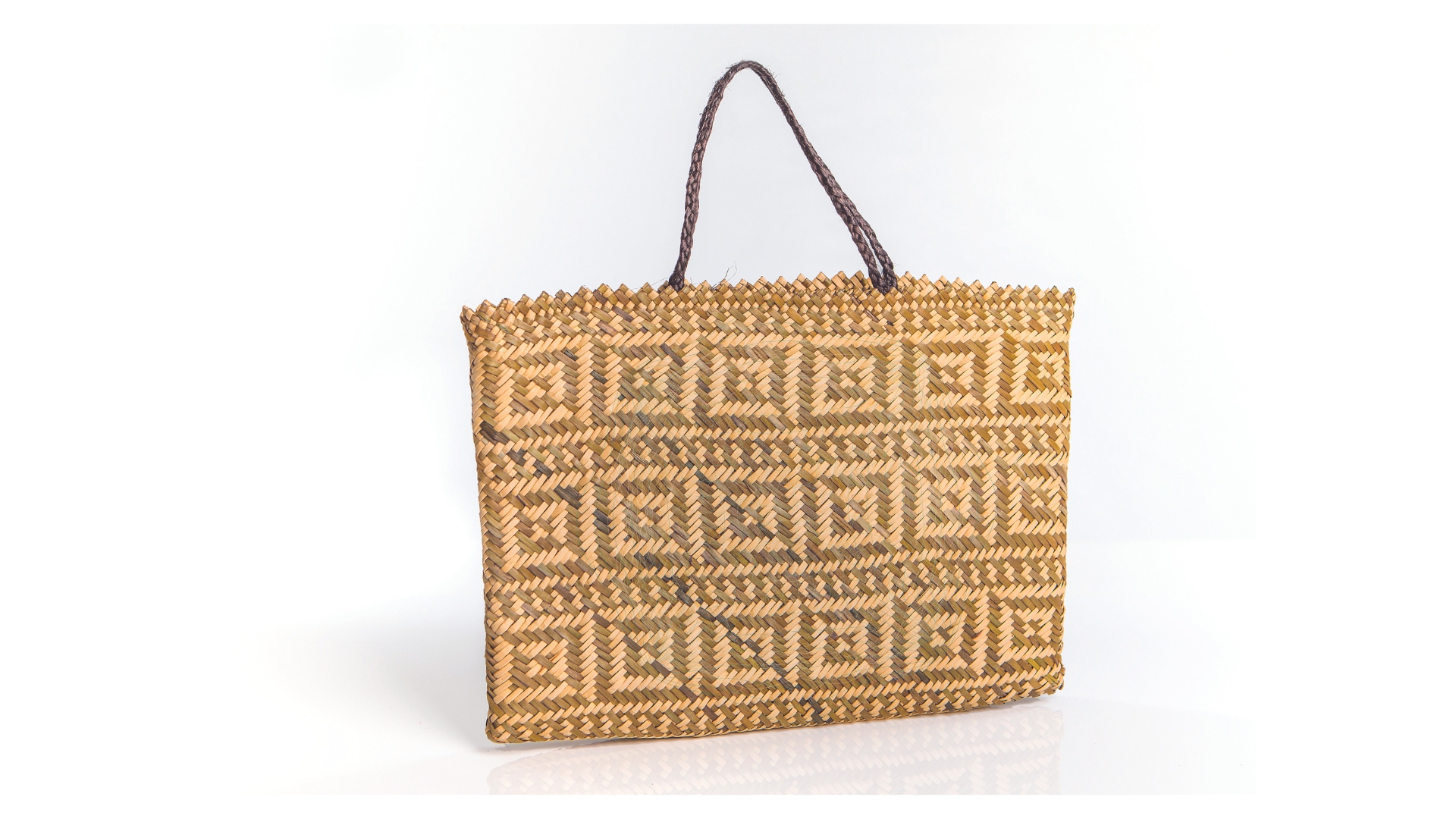
One day a complete stranger came to our gallery in Waiwhetu bearing a gift. She knew our whānau would treasure this kete.
We were overjoyed because this beautiful kete was one woven by our kuia.
As I unwrapped the tissue paper, I was taken aback not only because it was so exquisite but because I knew it was her work as soon as I saw it.
We have two kete like it in our collection. Both woven by Nana Rangimarie. It felt like seeing a long lost sister return home.
I held her to me and shed a few tears.
The thoughtful person felt compelled to return Nana's kete to us. What she didn't know is that the pattern also holds extra special meaning for our whānau.
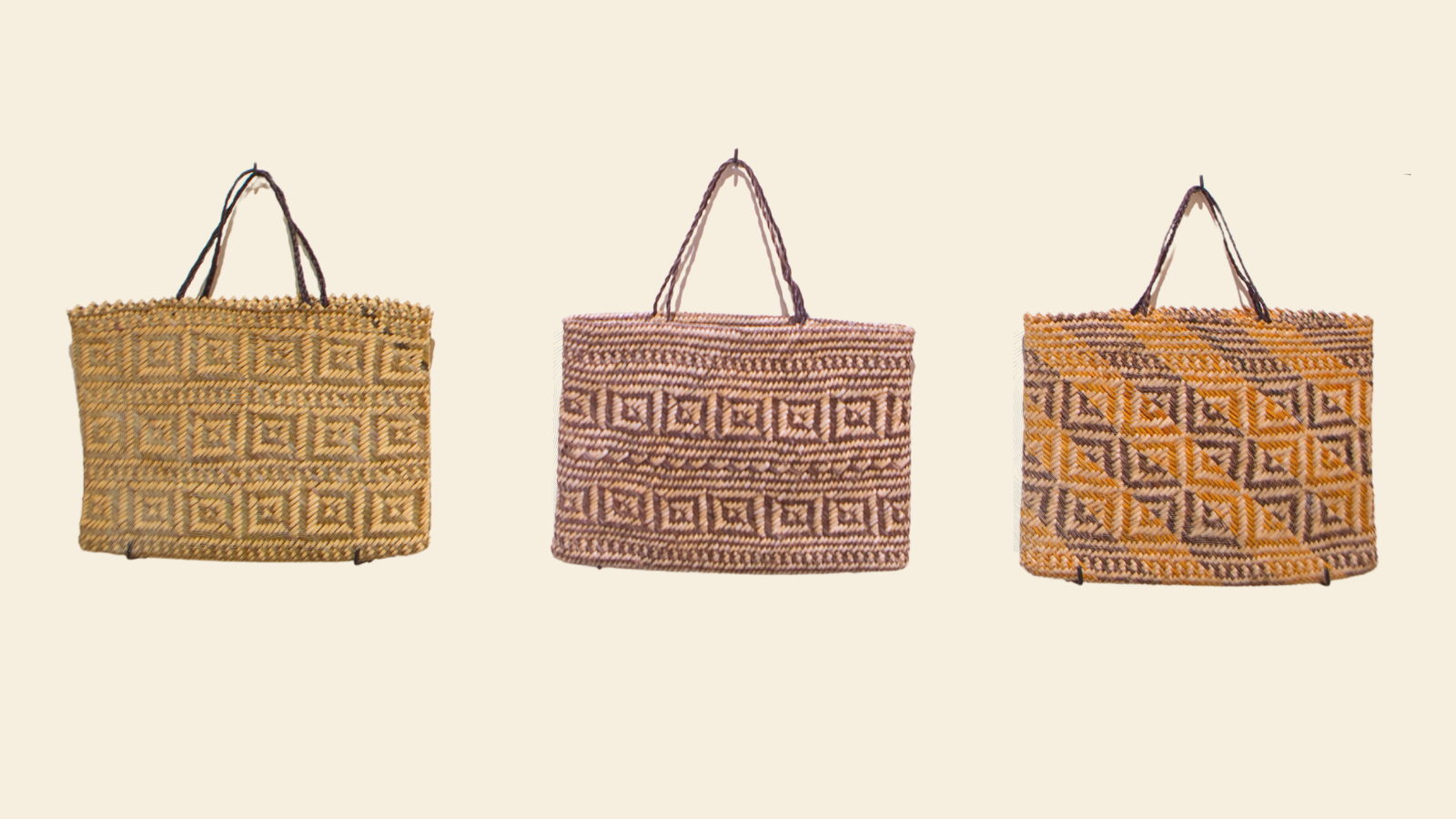
Te karu o te whenua is a pattern that Nana Rangimarie wove, and the women of our whānau continue to weave.
In the past, like Scottish tartans, many patterns were associated with particular whānau, hapū or iwi.
There was a time, if we saw a kete woven with Te Karu o te whenua, we knew that a member of our whānau had woven it.
Nowadays, many weavers choose to weave a pattern simply because they come across it in a book or on social media, like the pattern and decide they'll weave it - not realising that the pattern may hold special significance or meaning to a whānau, hapu or iwi.
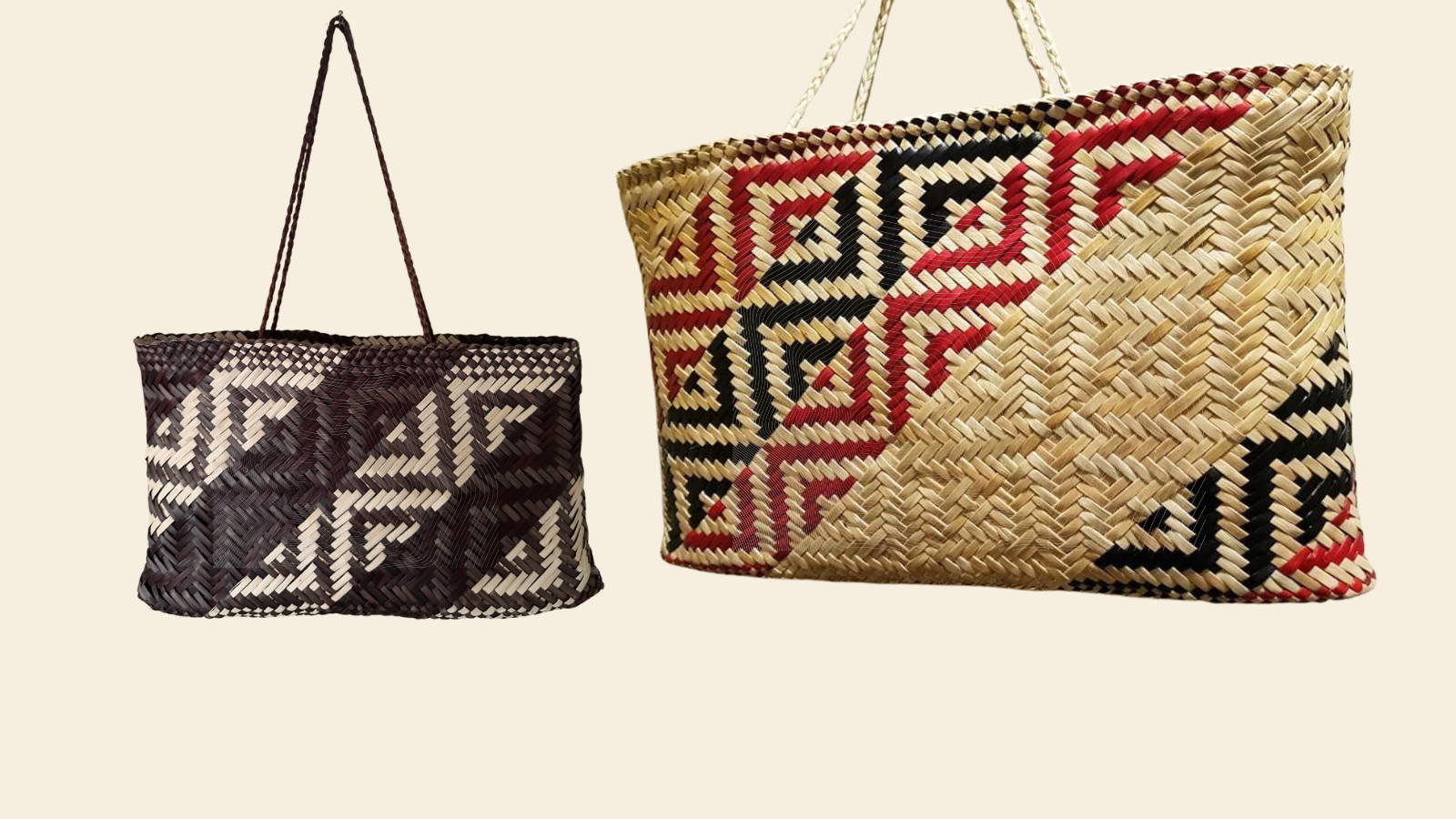
Below are another two kete whakairo with Te karu o te whenua.
The one on the right was woven by Veranoa Hetet. The other was woven by Veranoa's niece, Sophie Owen, when she was 16 and learning to weave with Veranoa.
Sophie is the administrator and Veranoa is a kaiako for the Hetet School of Māori Art which brings you The Māori Weaving Experience and the Hetet Whare Toi.